Evidence and dependencies
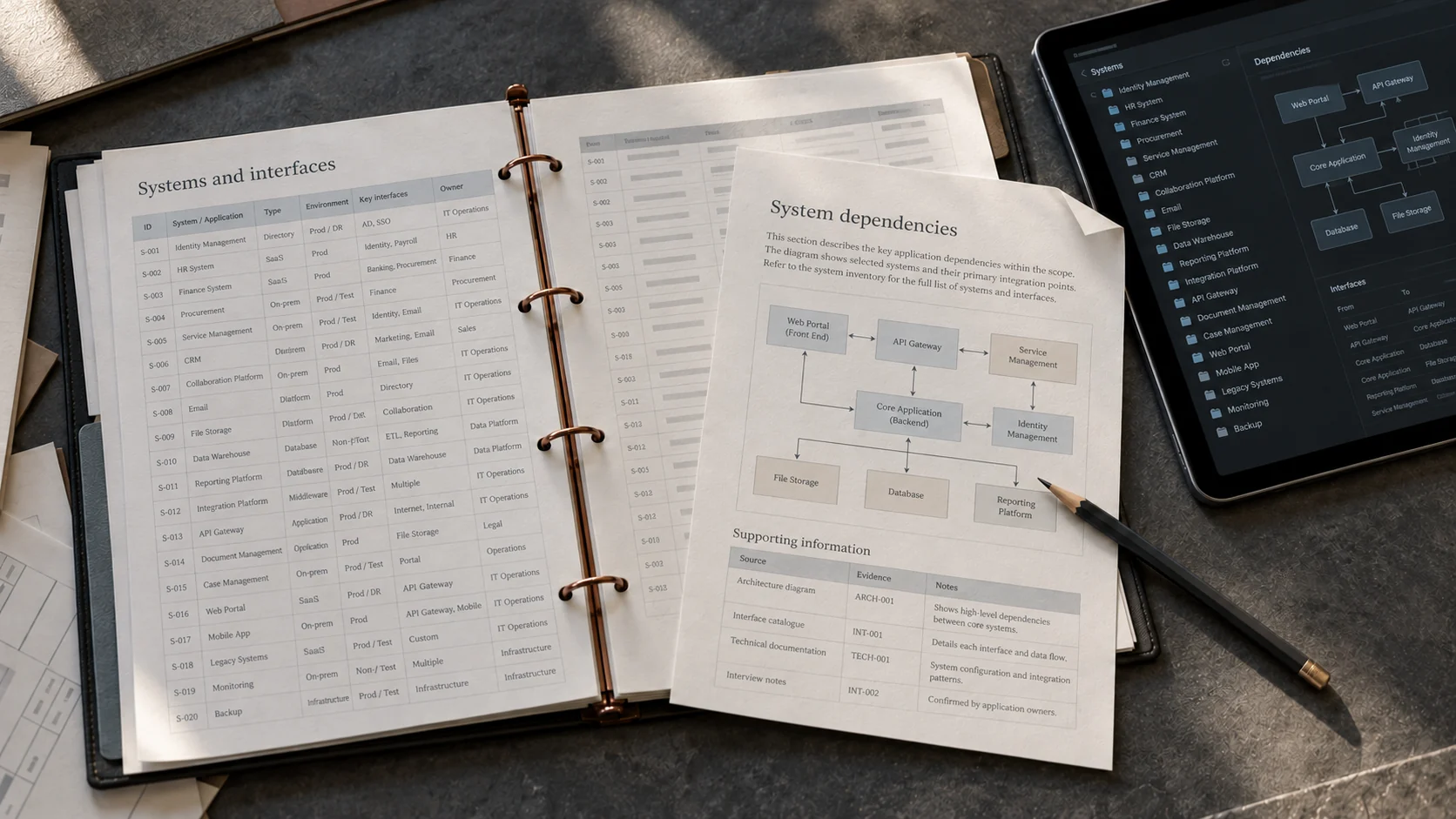
A current-state map, critical dependencies, and a findings register that separates observed facts, assumptions, and unresolved questions.

Technology Decision Assessment
Commission a focused answer to one consequential technology decision before committing to implementation.
A focused engagement
Use this when an integration does not behave as expected, an acquisition creates difficult dependencies, or a critical initiative needs a credible next phase.
Michael McClintock leads the assessment. We review the available evidence, interview the relevant teams, and evaluate options against the operating requirements.
What you receive
A current-state map, critical dependencies, and a findings register that separates observed facts, assumptions, and unresolved questions.
Practical alternatives, their operating consequences, and a recommendation tied to the decision you need to make.
A bounded next phase with deliverables, owners, prerequisites, sequence, and explicit exclusions.
Observable acceptance criteria, evidence still needed, and the decision required from your sponsor.
Explore a representative work product
A sample assessment built around the public implementation record shows the recommendation, options, delivery sequence, and proposed acceptance evidence.
Scope and timing
The standard working plan spans ten business days after kickoff and receipt of the agreed inputs. The proposal confirms actual dates and adjusts the plan for access, stakeholder availability, and complexity.
Implementation, production changes, formal security certification, legal or regulatory opinions, platform licensing, and ongoing support require separate scope. Additional systems or decisions are agreed as a scope change.
Commercial clarity
This is a paid, fixed-scope engagement. We provide a written fixed-fee proposal after confirming the decision, systems, evidence, and participants. The proposal states the currency, fee, payment terms, timetable, and exclusions before work starts.
You can commission the assessment on its own. Any implementation is a separate decision and scope.
Procurement and engagement setupReview and completion
Completion means the agreed findings, options, first-phase plan, and acceptance criteria have been delivered and reviewed. Open evidence gaps are recorded with their effect on the recommendation. Assessment completion does not mean a system has been repaired or an implementation outcome is guaranteed.
Connect with TMG
Discuss the question, the constraints, and the evidence you need to move forward.